
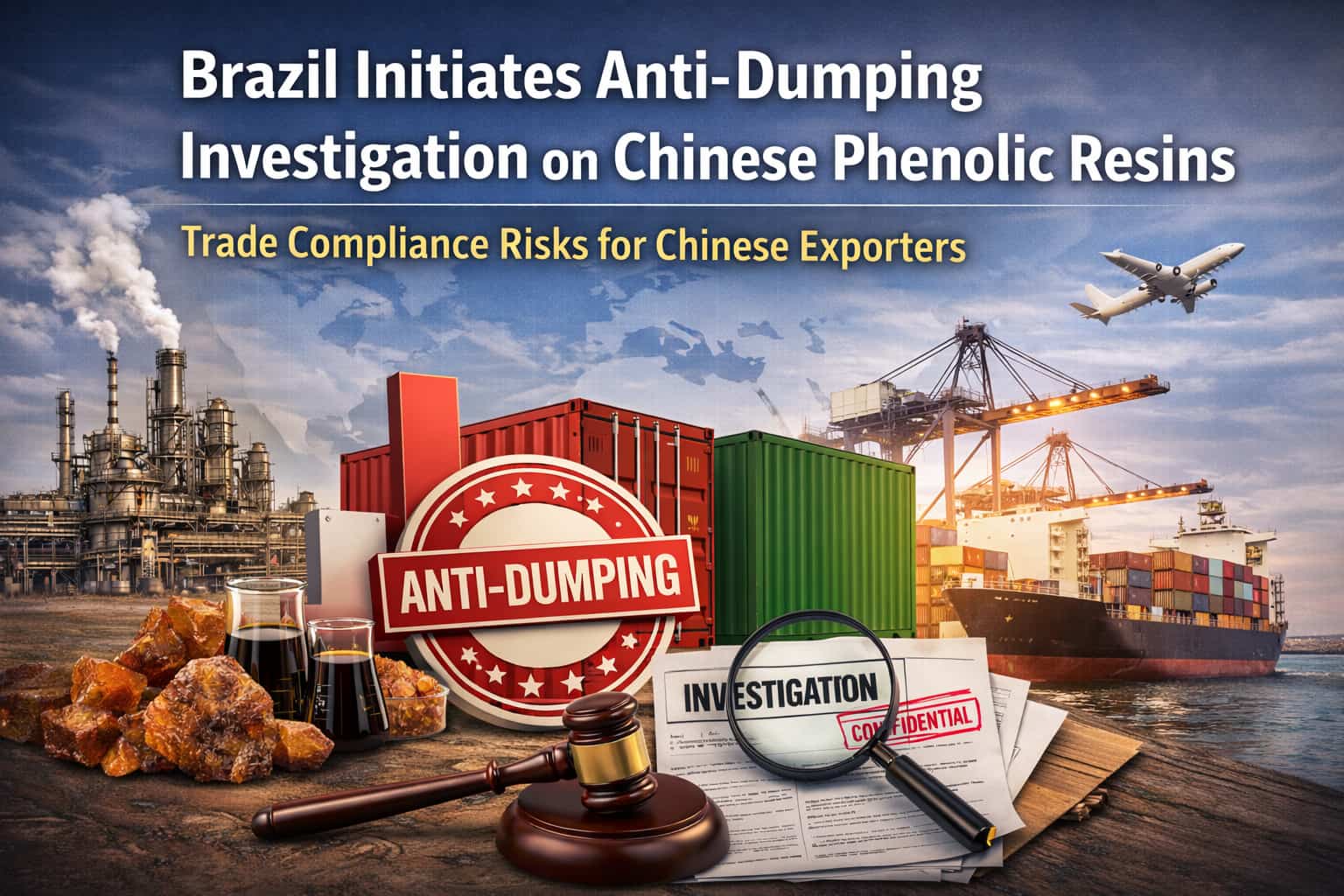
16 января 2026 года Секретариат внешней торговли Министерства развития, промышленности, торговли и услуг Бразилии (MDIC/SECEX) издал Уведомление № 2 от 2026 года. По запросу бразильской компании (ASK Crios Produtos Químicos Ltda) Бразилия официально начала антидемпинговое расследование в отношении фенольных смол, поставляемых из Китая.
Начало этого расследования указывает на растущие риски для Китая, связанные с соблюдением торговых правил и увеличением издержек. фенольная смола экспорт на бразильский рынок. Соответствующим экспортерам рекомендуется внимательно следить за развитием ситуации и заблаговременно оценивать ее потенциальное влияние на свою деятельность.
1. Потенциальное влияние на экспорт фенольных смол из Китая в Бразилию.
Исходя из предыдущих антидемпинговых дел Бразилии, в случае положительного окончательного решения по итогам расследования могут возникнуть следующие последствия:
Для Фенольная формальдегидная смола Производители и экспортеры, в значительной степени зависящие от бразильского рынка и продолжающие использовать модель прямого экспорта, могут столкнуться с повышенными операционными и коммерческими рисками.
2. Роль торговых соглашений с третьими странами в управлении рисками
В рамках правовой и нормативной базы торговые соглашения с третьими странами стали широко распространенным подходом к управлению рисками в международной торговле химической продукцией.
К основным принципам относятся:
Вся связанная с этим деятельность должна строго соответствовать законам, правилам и нормам происхождения соответствующих юрисдикций.
3. Ключевые аспекты соблюдения нормативных требований в торговых операциях с фенольными смолами
Учитывая характеристики изделий из фенольных смол, компаниям следует уделять особое внимание следующим аспектам при планировании торговых и логистических структур:
♣ Выбор стран-торговых хабов
Некоторые страны Юго-Восточной Азии часто оцениваются в связи с развитой инфраструктурой химической торговли и стабильными торговыми отношениями с Латинской Америкой. Окончательные решения должны приниматься на основе формы продукта, классификации по ТН ВЭД и требований бразильской таможни.
♣ Управление соответствием стандартам происхождения
Независимо от того, требуется ли дальнейшая переработка, строгое соблюдение правил происхождения имеет важное значение, в том числе:
♣ Структура логистики и документации
Торговые маршруты следует тщательно планировать, чтобы обеспечить соответствие процессов транспортировки, таможенного оформления и реэкспорта местным нормативным требованиям, а также поддерживать полную и согласованную систему документации для снижения рисков, связанных с несоблюдением требований.
4. Рекомендации для экспортеров: предварительная оценка и стратегическое планирование.
В связи с антидемпинговым расследованием Бразилии в отношении китайских фенольных смол экспортерам рекомендуется рассмотреть следующие меры:
Планирование на ранних этапах и систематическая оценка могут значительно снизить операционные и финансовые последствия как в период проведения расследования, так и после принятия окончательного решения.
5. Заключение
Бразилия начала антидемпинговое расследование в отношении китайских товаров. Феноформальдегидная смола В документе подчеркивается ужесточение глобальных торговых условий для химической продукции. Риски, связанные с зависимостью от одного экспортного маршрута, становятся все более существенными.
В этих условиях усиление контроля за соблюдением нормативных требований, оптимизация рыночных стратегий и повышение эффективности контроля торговых рисков имеют важное значение для китайских экспортеров фенольных смол, стремящихся к устойчивому росту в Бразилии и на более широком рынке Латинской Америки.
Веб-сайт: www.elephchem.com
WhatsApp: (+)86 13851435272
Электронная почта: admin@elephchem.com



 Поддерживается сеть IPv6