
Пленка из поливинилового спирта (ПВА) Поливинилацетат (ПВА) — высокоэффективный синтетический полимерный материал, характеризующийся исключительной растворимостью в воде, высокой прозрачностью и оптической стабильностью. Состоящий преимущественно из легких элементов, таких как углерод, водород и кислород, пленка из ПВА обладает превосходной пластичностью и гибкостью, что делает ее незаменимым функциональным материалом в таких высокоточных отраслях промышленности, как электроника, упаковка и биомедицина.
Основные характеристики пленки ПВА
Физические и химические свойства
Основные области промышленного применения пленки ПВА
1. Производство поляризационных дисплеев
Пленка из поливинилацетата (ПВА) остается незаменимым основным оптическим материалом для высококачественных ЖК- и OLED-панелей, используемых в телевизорах, смартфонах, ноутбуках и автомобильных дисплеях. Точный контроль толщины напрямую предотвращает такие проблемы, как неравномерность яркости, оптические помехи и смещение цвета.
2. Разделительные и фильтрационные мембраны
Благодаря своей избирательной проницаемости на молекулярном уровне, Поливиниловый спирт (ПВА) Химически модифицирован для применения в первапорации (ПВ), разделении газов (например, для выделения CO2), а также в качестве гидрофильного покрытия для систем обратного осмоса (ОО) и нанофильтрации в системах водоочистки.
3. Биомедицинские материалы и экологичная упаковка
Благодаря своей биосовместимости и растворимости в воде, поливинилацетат (ПВА) используется для производства водорастворимой упаковки для индивидуального дозирования (например, капсул для моющих средств), растворимых пленок для приема внутрь фармацевтических препаратов, а также биоразлагаемых сельскохозяйственных пленок, которые безопасно растворяются в окружающей среде.
4. Функциональные композитные пленки в гибкой электронике
Изменяя соотношение пластификаторов, можно создавать композитные матрицы на основе поливинилового спирта (ПВА) с высокой эластичностью, устойчивостью к разрывам, в качестве защитных слоев или электролитных подложек для гибких датчиков, интеллектуальных носимых устройств и современных строительных материалов.
Передовая метрология: преодоление трудностей измерения толщины пленок.
Традиционные контактные метрологические инструменты, такие как микрометры или механические стилусы, имеют существенные ограничения при работе с чувствительными полимерами, такими как ПВА:
Они не способны фиксировать в реальном времени непрерывные изменения толщины движущейся сетки.
Физический контакт может привести к царапинам или деформации деликатной, чувствительной к влаге пленки.
Точечный метод отбора проб чреват тем, что при нем могут быть пропущены локальные дефекты или неравномерность покрытия по всей поверхности полотна.
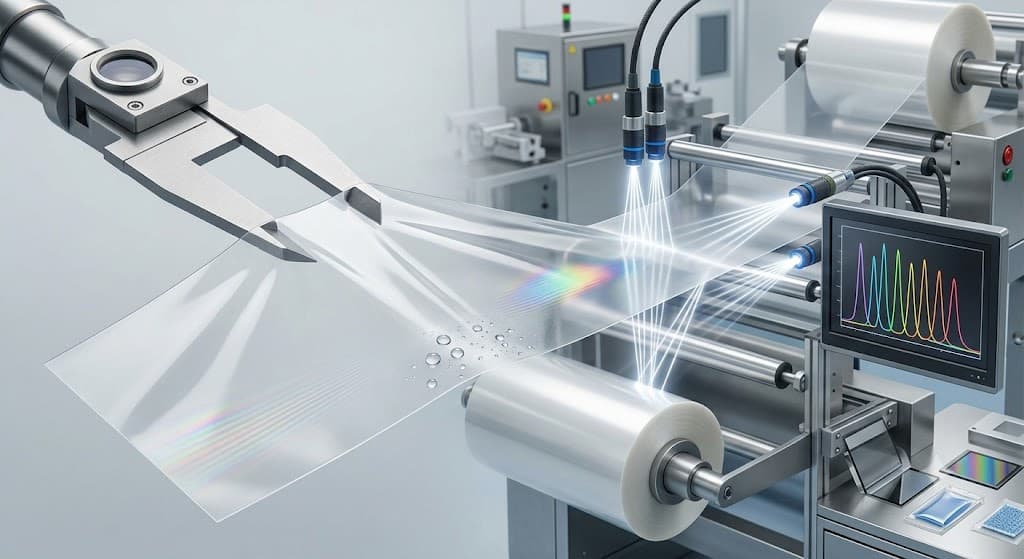
Для преодоления этих барьеров современные производственные линии внедряют передовые решения в области бесконтактной оптической метрологии, основанные на спектральной интерференции белого света:
| Тип системы | Принцип измерения | Контекст промышленного применения |
| Спектральная интерференционная спектроскопия | Анализирует фазовые сдвиги отраженного света для неразрушающего расчета абсолютной толщины. | Исследования и разработки, а также контроль качества: идеально подходит для анализа многослойных полимерных структур и калибровки параметров в лабораторных условиях. |
| Многоканальные линейные системы | Непрерывное многоточечное отслеживание оптического волокна, интегрированное с производственными ПЛК. | Рулонная (R2R) экструзия: отслеживание профиля толщины полотна в реальном времени для оптимизации коэффициента выхода годной продукции при высокоскоростной экструзии. |
| Оптические линейные датчики сканирования | Использует высокоскоростные линейные датчики для достижения 100%-ного картирования толщины всей поверхности. | Высококачественный контроль оптики: исключает локальные отклонения или слепые зоны, характерные для поляризационных линз премиум-класса. |
Часто задаваемые вопросы о ПВА-пленка
В: Является ли пленка из поливинилацетата (ПВА) полностью биоразлагаемой?
А: Да, при определенных условиях окружающей среды. Хотя ПВА быстро растворяется в воде, его углеродный каркас впоследствии расщепляется на воду (H2O) и углекислый газ (CO2) под действием определенных штаммов бактерий и ферментов (таких как поливиниловый спиртдегидрогеназа).
В: Как влага влияет на характеристики поляризационной пленки ЖК-дисплея?
А: Незащищенная пленка из поливинилацетата (ПВА) быстро впитывает влагу, вызывая расслабление выровненных полимерных цепей и нарушая ориентацию комплексов йода. Это приводит к резкому снижению эффективности поляризации, проявляется в виде утечки света и вызывает искажение цвета на дисплеях.
В: Могут ли оптические толщиномеры измерять толщину многослойных пленок (например, TAC + PVA + TAC)?
А: Да. Усовершенствованные алгоритмы спектральной интерференции позволяют успешно различать границы раздела отдельных слоев при условии достаточной разницы в показателе преломления (n) между соседними материалами (например, слоями клея ПВА и ТАК). Это позволяет одновременно независимо отслеживать толщину каждого слоя.
Веб-сайт: www.elephchem.com
WhatsApp: (+)86 13851435272
Электронная почта: admin@elephchem.com



 Поддерживается сеть IPv6